Stickman Scratch Games
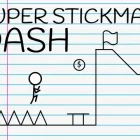



Stickman Scratch Games feature simple character designs in activities that may involve fighting, running, platforming, obstacle avoidance, or puzzle-solving. Their straightforward visual style can make the main action easy to follow, while the objectives range from short reaction challenges to stages requiring careful movement. Players must learn the controls and understand the environment to complete each task successfully.
Simple Characters, Different Challenges
A stick figure can take part in many kinds of activities without requiring the same visual complexity as a detailed character model. One title may focus on movement through a platforming course, while another emphasizes combat, survival, or interaction with objects. Stickman Scratch Games therefore cover a broad range of mechanics despite their recognizable character style.
Before choosing a strategy, identify the main objective. A task that rewards speed may require a different approach from one that depends on precise timing or avoiding unnecessary damage.
Movement and Obstacle Navigation
Movement-based challenges require players to guide the character around gaps, barriers, and changing surfaces. Learning how far the character travels and how quickly it responds to input helps reduce avoidable mistakes. When the route becomes difficult, look for a safe position from which to prepare the next movement.
- Inspect the route: Identify gaps, barriers, and possible landing areas.
- Control direction: Use deliberate movements instead of unnecessary corrections.
- Anticipate hazards: Prepare for obstacles before reaching them.
- Review mistakes: Adjust the timing or direction after an unsuccessful attempt.
Combat and Defensive Choices
Some stickman activities involve opponents and require players to combine attacks with defensive movement. Repeatedly attacking may leave the character vulnerable if the opponent has an opportunity to respond. Observing movement patterns and waiting for a suitable opening can make encounters easier to manage.
Check the controls to understand which actions are available. If movement and attacks use different inputs, practicing their coordination can help you respond more effectively when several events occur close together.
Understanding Timing and Reach
In combat or obstacle-based challenges, the timing of an action can matter as much as the direction. An attack may miss when an opponent is too far away, while a jump may fail if it begins at the wrong point. Learning the character’s reach and movement response makes these decisions more predictable.
- Observe the distance to the target or obstacle.
- Choose an action that suits the current position.
- Watch the result and note where the movement ends.
- Adjust the next attempt using what you learned.
Using the Environment Effectively
Some stages include platforms, barriers, objects, or narrow routes that influence how a character can move. The environment may provide a safer route or create a disadvantage if the character becomes trapped. Understanding the layout can help players avoid unnecessary confrontations and choose a more useful position.
Look for alternative paths when the direct route repeatedly leads to failure. A small detour may provide additional space or a better angle for the next action.
Learning Through Repeated Attempts
Repeated attempts can reveal the cause of a difficult section. A player may discover that a jump needs to begin earlier, an attack requires a closer position, or an obstacle follows a predictable pattern. Stickman Scratch Games become more manageable when practice is used to test specific improvements.
- Identify the action that most often causes trouble.
- Practice it separately when possible.
- Keep movements consistent while learning the timing.
- Apply the improved technique to the full stage.
Choosing Between Different Stickman Activities
Players who enjoy fast encounters may prefer fighting challenges, while those who like precision might choose platforming or obstacle courses. Puzzle-based versions emphasize a different set of skills, including observation and planning. The character style alone does not determine difficulty, so examine the actual objective before starting.
Explore ScratchGamesHub to discover different categories and compare activities that use movement, combat, and problem-solving. Choosing according to the central mechanics can help you find a suitable challenge rather than relying only on its visual presentation.
Stickman Scratch Games combine a recognizable character style with a variety of objectives and control systems. Learning movement, understanding attack timing, and using the environment effectively can improve performance across different formats. By identifying the main challenge and adjusting your approach after mistakes, you can make progress through stages that initially appear difficult.