

Vampire Crawlers
Play Vampire Crawlers, a deckbuilder, roguelite, dungeon crawler game, free in your browser. No download, no sign-up.
You may like





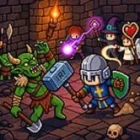















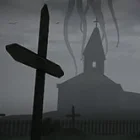





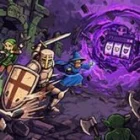




You step forward one square, and a swarm of blocky sprites fills the screen, each one ready to move the moment you stop. Then the clock freezes and a hand of cards appears. That pause is the signature moment of Vampire Crawlers, where the reverse bullet hell chaos of the Vampire Survivors world becomes a puzzle you solve at your own pace. Every turn asks the same question: how much can you do with the mana you have?
| Genre | Deckbuilder, roguelite, dungeon crawler |
| Perspective | First-person, grid-based movement |
| Combat | Turn-based card play with mana costs |
| Progression | Village upgrades and unlocks between runs |
Grid Crawling and Turn-Based Card Combat in Vampire Crawlers
Maps are laid out as a grid that you cross one square at a time, seen through the eyes of your chosen Crawler instead of from above. WASD handles movement, the arrow keys or Q and E handle turning, and a controller works just as well for anyone who prefers dual sticks. Combat is turn-based: you draw cards, play as many as your mana allows, and then the enemies take their turn, usually arriving in swarms. The weapons Vampire Survivors veterans remember, such as whips, axes, wands, guns, and garlic, are still here, but they no longer fire on their own. They are cards in your hand.
Cards are readable at a glance, since color and mana cost carry most of the information. You never face a wall of rules text, which keeps turns quick even though the game lets you think as long as you like. Once you find your rhythm, exploring a square and clearing a fight can happen in a few seconds of clicking.
Players arriving from Vampire Survivors often expect to build a loadout and then watch it work. Here the deck is only half the job, and your hands finish it.
Combo Chains and the One-Mana Ladder
The first twist the game introduces is the combo. If you play a card that costs exactly one more mana than the card you played before it, you build a combo, and every card after that hits harder. The multiplier also boosts effects like gaining mana, drawing cards, building armor, and restoring health. A card that deals 48 damage on its own can reach 96, 144, or 192 depending on how far the chain climbs, and wild cards, extra draws, and mana generation push the numbers higher still.
Beginners usually reach for the most expensive card in hand first, which is the quickest way to break a chain before it starts. The ladder works the other way around: start low, climb one step at a time, and save the heavy hitter for the top. You will recognize the moment when your hand holds a 1-cost, a 2-cost, and a 4-cost card, and you realize the 4 has to wait or the chain collapses.
Draw luck is the part players argue about most. You can plan a perfect ladder and still draw a hand with no clean path upward, and some turns simply feel like wasted potential. Deckbuilding discipline reduces that risk, but it never removes it.
Crawler Cards, Gems, and Deck Growth in Vampire Crawlers
Your Crawler is also a card in your deck. Each Crawler starts with different stats and starter cards, and each has a unique ability that can trigger during combat. Put a Crawler card into play and it sets a trigger tied to a certain card type or color. Play a matching card and you might draw extra cards, gain mana, or buff a stat. Crawler cards persist between battles until they have used a set number of activations, and then they are shuffled back into your deck.
As you kill enemies you collect experience coins, and enough of them gives you a level up. Each level lets you add another card to your deck or take a gem instead. Many cards have a slot that can hold a gem, and the effects range from simple bonuses to changes that rewrite how a card behaves. Gems also turn up in chests and encounters, so a good run is rarely decided by level ups alone.
Once you unlock the option to start with a second or third Crawler card, runs get stranger and more rewarding. Players who love deck math will spend whole sessions tuning which card types their Crawlers react to.
Mad Forest to Cappella Magna: How the Dungeons Escalate
Early in the game, Mad Forest eases you in with an understated landscape and enemies that let you learn the ladder without punishment. The Dairy Plant is a different mood entirely, an unsettling industrial wasteland full of chain-link fences. The contrast shows how much atmosphere a fixed pixel-art perspective can carry.
By the time you reach Gallo Tower, the maps blend interior and exterior spaces into a huge gothic structure, and your deck needs real synergy to keep up. Cappella Magna is the capstone level, and it gets a visible glow-up compared with the stages before it. Harder enemies demand bigger chains, so a deck that survived the opening levels on raw damage will start to fall apart.
Fans of classic first-person dungeon crawlers will feel at home with the square-by-square movement and the option to play entirely on the keyboard. The sprite-style enemies are blocky and strange, yet they still manage to look menacing at the right moments.
Village Upgrades, Arcanas, and What Carries Between Runs
Every death sends you back to the village, where gold coins become permanent buffs and new characters unlock as you explore. The Inn lets you pick your Crawler, the Town Hall lists your unlocks, and the Graveyard opens settings and the exit. You can reset your powerups at any time and get your coins refunded, which encourages experimentation instead of locking you into early choices.
Relics hidden across the maps unlock additional buildings, so thorough exploration pays off beyond the current run. Unlock Arcanas and you gain access to the Fortune Teller, where you can pick a card with a profound impact, such as letting up to five mana carry over from one turn to the next. That single change reshapes how you plan a ladder.
Handheld players get a smooth deal here, because the split controls for moving and looking map naturally onto dual sticks, and the button-heavy turns feel good on a controller. The powerup menu keeps expanding the deeper you go, so there is always a new upgrade to chase.
Mistakes Newcomers Make in Vampire Crawlers Runs
Most early losses come from the same few habits, and none of them are about reflexes.
- Spending all your mana on one expensive card instead of climbing the cost ladder.
- Ignoring which card type your Crawler card reacts to.
- Skipping gems because the slot looks minor.
- Forgetting to check the unlocks list after earning Arcanas.
Each of these mistakes is easy to fix once you notice it. The Crawler trigger is a good example, because playing a matching card before a big hit can supply the extra mana that keeps a chain alive.
The unlocks list deserves more attention than most players give it. Learning how to earn new options is a core part of progressing, and it is the quickest way to find out why a run ended earlier than expected.
Questions Players Ask About Vampire Crawlers
How does the combo work in Vampire Crawlers?
You build a combo by playing a card that costs exactly one more mana than the card before it. Each step in the chain boosts the effects of later cards, including damage, armor, healing, mana gain, and card draw. A card that deals 48 damage alone can climb to 96, 144, or 192 as the chain grows.
What does a Crawler card do once it is in play?
A Crawler card sets a trigger tied to a certain card type or color. Whenever you play a matching card, you can draw cards, gain mana, or buff a stat. The Crawler card stays active between battles until it runs through its activations, and then it returns to your deck.
Do gems and Arcanas change how a run plays?
Yes, and in major ways. Gems slot into cards and can range from small boosts to effects that change how a card works. Arcanas unlock the Fortune Teller, where a single pick can let up to five mana carry over between turns.
Vampire Crawlers rewards the player who plans a ladder of mana costs before touching a single card, and by the time Cappella Magna fills the screen that habit decides whether a deck survives or collapses. Between the Fortune Teller’s Arcanas, gem slots, and a Crawler card that keeps triggering, the next run always starts with a new idea worth testing.
Explore More Action Games
Keep the session going with more games like Vampire Crawlers:


Player Reviews
There are no reviews yet. Be the first one to write one.