

Way of the Ninja
Play Way of the Ninja, a precision platformer Scratch game, free in your browser. No download, no sign-up.
You may like















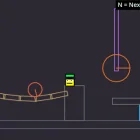











What does it take to clear a level when every wall is a potential foothold and every floor tile could be a trap? Way of the Ninja asks that question from the first screen. Your ninja runs, jumps, and clings to walls through compact levels packed with hazards, and the fastest route is almost never the obvious one.
| Genre | Precision platformer |
| Hero | A ninja |
| Core actions | Run, jump, wall jump |
| Goal | Reach the exit of each level |
Wall Jumps and Movement in Way of the Ninja
The wall jump is the ninja’s most important move. Pressing jump while touching a wall launches the ninja off it in the other direction, and chaining wall jumps between two close walls lets you climb vertical shafts that no single jump could reach. New players treat walls as obstacles and try to go around them, missing the fact that most levels are built for climbing.
Walls are paths, not barriers. Many levels can only be finished by bouncing between them.
The timing of a wall jump matters as much as the input. Jumping the instant the ninja touches the wall gives a sharp, controlled bounce, while waiting too long lets him slide down and lose height. Players who come from other precision platformers usually find the rhythm quickly, and the satisfying tap-tap of a clean wall climb becomes second nature.
- Jump as soon as the ninja touches a wall for maximum height.
- Use two close walls to climb vertical shafts.
- Look for walls first when a gap looks too wide to jump.
Hazards and How the Levels Escalate
Early levels introduce one hazard at a time, giving you space to learn each one. Spikes sit on floors and walls, traps move in patterns, and gaps demand precise jumps. The early stages feel almost relaxed once you understand the wall jump.
The difficulty climbs steadily. Later levels combine hazards in tight spaces.
By the time spikes start lining the walls you need for climbing, every wall jump has to land on a safe patch, and the margin for error almost disappears. Speedrunners love this stretch, since a clean chain of wall jumps through a spiked shaft is the most satisfying move in the game.
- Learn each hazard’s pattern on the level where it first appears.
- Plan which wall patches are safe before climbing a spiked shaft.
- Restart quickly after mistakes instead of trying to recover.
Patience, Restarts, and the Common Complaint
Restarts are fast, which is essential, because many levels take dozens of attempts. The game expects you to fail, learn the layout, and try again. Players who accept that loop enjoy the steady progress; those who expect to clear levels on the first try get frustrated quickly.
The honest criticism is that some later levels feel unforgiving. A single pixel of error ends a long climb.
Fans argue that the precision is the point and that clearing a hard level is rewarding precisely because it demanded perfection. Casual players can still enjoy the early levels, which are welcoming enough for anyone curious about the genre.
Way of the Ninja Questions From New Players
How do you climb tall walls in Way of the Ninja?
Chain wall jumps between two close walls, pressing jump the instant the ninja touches each wall. Waiting too long lets him slide down and lose height, so quick, rhythmic taps work best.
Why does the ninja keep sliding into spikes?
He is probably clinging to the wall too long before jumping. Jump immediately on contact, and plan which parts of the wall are safe before starting the climb.
Are the later levels too hard for beginners?
They are demanding, especially once spikes line the climbing walls. Practicing wall jumps on the early levels until they feel automatic makes the later ones far more manageable.
Way of the Ninja clicks once you treat every wall as a path, tap jump the instant the ninja touches it, and plan your climb around the spiked patches before moving. Master that rhythm and the tightest shafts become the best part of the game.
Other Adventure Scratch Games You May Like
If Way of the Ninja clicked with you, try one of these next:
Also in Platformer Scratch Games



Player Reviews
There are no reviews yet. Be the first one to write one.