
Smash Kombat
Play Smash Kombat, a platform fighter Scratch game, free in your browser. No download, no sign-up.
You may like
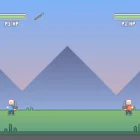
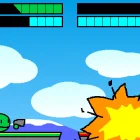





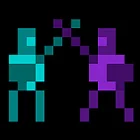











You charge across the stage, swing at your rival, and watch him sail off the edge because you hit him at the exact moment he left the ground. Smash Kombat is a platform fighter built on that kind of moment. Two fighters share a small stage, and the winner is usually the one who controls space and knocks the other off, not the one who presses buttons fastest.
| Genre | Platform fighter |
| Format | Head-to-head on one keyboard |
| Core actions | Move, jump, attack |
| Win condition | Knock the rival out or off the stage |
Spacing and Knockback in Smash Kombat
Every hit pushes the target back, and hits landed on an airborne fighter send him much further. That makes jumping a risk as well as a tool, because a fighter caught mid-jump has no footing to resist the push. New players jump constantly to look evasive and end up getting launched off the side of the stage by a single well-timed swing.
Staying grounded is safer than it looks. Jumps work best as a reaction, not as a habit.
The fight really happens in the space between the two fighters. Standing just outside your rival’s reach and stepping in only when he commits to an attack is called spacing, and it wins far more rounds than rushing in. Players who come from traditional fighting games pick up spacing almost immediately and tend to dominate their first few matches against friends.
Edges, Recovery, and Ring-Outs
The stage edges are where rounds are decided. Pushing a rival toward the side shrinks his options, since he cannot back away any further and every hit risks sending him over. Once a fighter is near the edge, the player in the middle holds a huge advantage.
Getting back to the center should always be the priority. Fighting from the edge is fighting from a losing position.
When you do get launched, the jump becomes a recovery tool. Steering back toward the stage in the air and landing on the platform rather than below it saves many rounds that looked lost.
- Hold the middle of the stage whenever possible.
- Punish rivals who jump carelessly near the edge.
- Use your jump to steer back after being launched, not to escape on the ground.
How Matches Heat Up Over a Round
Early in a round, both fighters usually trade cautious pokes, testing range and timing. As the damage builds, every hit carries more weight, and the round becomes a tense game of waiting for the other player to make the first mistake. The final exchanges are often decided by a single swing.
That swing is the one players remember. The heavy thud as a fighter flies off screen is the most satisfying sound in the game.
Casual players tend to enjoy the chaos of early exchanges, while competitive pairs focus on these final moments, where patience and spacing matter most.
Where Smash Kombat Divides Players
The main criticism is button mashing. A player who swings constantly can sometimes beat a careful one in the short term, and that feels unfair to players trying to fight with spacing and timing.
Over a full set, careful play usually wins. Mashing leaves too many openings near the edges.
The other complaint is variety, since the core moves are simple. For quick head-to-head fights with a friend sharing the keyboard, though, that simplicity keeps the rules clear and the matches fast.
Smash Kombat comes down to holding the middle of the stage, catching rivals mid-jump for maximum knockback, and steering back from every launch instead of panicking. Fight from the center and the ring-outs start going your way.
More 2 Player Scratch Games to Play Next
If Smash Kombat clicked with you, try one of these next:
Player Reviews
There are no reviews yet. Be the first one to write one.