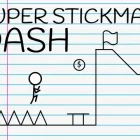
Super Stickman Dash
Play Super Stickman Dash, a auto-running platformer Scratch game, free in your browser. Controls: One jump input.
You may like




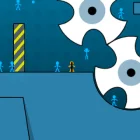












Is it better to jump early and risk the landing, or wait and risk the takeoff? Super Stickman Dash asks that question over and over, because the stickman never stops running and every spike, gap, and ledge needs an answer in the moment. The rules fit in one sentence, yet the timing takes real practice.
| Genre | Auto-running platformer |
| Controls | One jump input |
| Collectibles | Coins along the course |
| Fail state | Touching spikes or falling off the course |
The Single-Button Loop in Super Stickman Dash
Everything happens through one input. The stickman runs forward automatically, the jump lifts him over hazards, and the course decides how much space you get between them. Because there is nothing else to manage, all your attention can go to spacing and timing, which is exactly where beginners slip.
The most common early mistake is jumping the instant a spike appears. That usually means landing directly on the hazard behind it.
Waiting until the stickman is close, but not touching, gives the cleanest arc. Players describe this as jumping off the last safe step, and it works for nearly every single spike in the opening stretch.
Ledges, Gaps, and Coin Placement
Ledges at different heights change the timing in a subtle way. Jumping up to a higher ledge needs an earlier takeoff, while dropping down to a lower one gives extra airtime that can carry the stickman too far. The game mixes these early in a run so you learn the difference quickly.
Coins usually mark a safe line through a section. They are a hint as much as a reward.
That rule bends later, when coins start hanging over gaps. Completionists chasing every coin will need tighter jumps than players who simply want to reach the end, and the difference is noticeable.
Where the Difficulty Starts to Bite
Early in the game, hazards come one at a time with flat ground in between. Once gaps and spikes start sharing the same stretch, the timing window shrinks, and a jump that clears the spike can drop you short of the far ledge. Most runs end in that first mixed section until the pattern sinks in.
- Look at the landing, not the hazard you are jumping over.
- Jump slightly earlier before rising ledges and slightly later before drops.
- Follow coin lines in the early stretch; they trace a safe path.
The giveaway that you are improving is how the stickman sounds and looks on landing: clean runs feel like a steady patter of short hops, while shaky runs are full of last-second leaps. Once your jumps start landing on the same rhythm, the mixed sections stop feeling random.
Younger players often enjoy the opening stretch most, since the pace there is gentle and the coin lines guide them through. The mixed sections later demand more patience.
What Players Like and Dislike About Super Stickman Dash
The simple controls are the biggest strength and the most common criticism at once. Some players love that a run can start in a second with no setup; others feel that one input gets repetitive after a few sessions.
The instant restart helps a lot. A failed run costs almost nothing, so trying again feels natural.
For players who enjoy improving a single skill, that loop is satisfying, and runs that once ended in the first mixed section eventually reach much further. Players who want variety in moves or levels may move on sooner.
Super Stickman Dash comes down to watching the landing instead of the spike, timing jumps differently for rising ledges and drops, and trusting the coin lines while the course is still gentle. Once those habits settle in, the mixed spike-and-gap sections stop ending your runs.
Explore More Platformer Scratch Games
Keep the session going with more games like Super Stickman Dash:
Also in Stickman Scratch Games
Player Reviews
There are no reviews yet. Be the first one to write one.