

Beyond The Frame
Play Beyond The Frame, a first-person psychological horror game, free in your browser. Controls: Keyboard and mouse.
You may like













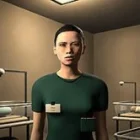


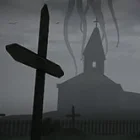




Beyond The Frame looks like a quiet walk through empty rooms, but it plays like a photography puzzle where every shot you take decides whether the dream lets you move on. You step into the sleeping mind of Charlie, an 11-year-old child, and the spaces around you are shaped by childhood anxiety instead of normal architecture. This is a first-person, linear story rather than a roaming sandbox, so the game pulls you forward one strange room at a time. The hook is simple: the camera in your hands can see things you cannot.
| Genre | First-person psychological horror |
| Perspective | Charlie, an 11-year-old child |
| Core tool | A camera that reveals clues and hidden paths |
| Setting | Liminal dreamscapes shaped by childhood anxiety |
| Structure | Linear story, about an hour per demo session |
| Controls | Keyboard and mouse |
Dream Logic and Liminal Spaces in Beyond The Frame
The dreamscapes are liminal spaces, the empty in-between places that the backrooms crowd knows well, but here they carry a 1990s nostalgia that makes them feel like a childhood memory half remembered. Familiar rooms bend under dream logic, and the store page describes the setting as ordinary things becoming distorted. You are not hunting for a monster so much as reading the room and noticing what is wrong with it. Anyone who enjoys liminal horror will recognise the feeling of walking somewhere that should be ordinary and finding it slightly off.
Charlie’s story is told through the metaphors hidden inside those dreams rather than through long cutscenes. Walking simulator fans will feel at home, since exploration and interpretation matter more than combat or reflexes. The game asks you to piece together what the rooms mean, and that puts the weight on observation.
The deeper you explore, the more Charlie’s anxieties seep into the dream. The rooms stop being merely odd and start feeling personal.
Charlie’s Camera: Photographing What You Cannot See
Your camera is the tool the game cares about most. You photograph your surroundings as you explore, and the camera can pick up things your own eyes miss, from clues to hidden paths. Once you realise the camera sees more than you do, every room becomes a question you can answer by pointing it somewhere new. The puzzles are built around that discovery, so the camera is both your eyes and your key.
Beginners often treat the camera like a flashlight they pull out only when stuck. A better habit is to photograph a new room as soon as you enter it, because clues and hidden paths can show up in the photos. Puzzle fans will enjoy this loop, since each shot is a small experiment with a clear result.
In many horror games you are afraid to look at things. Here, looking is the mechanic, and the lens turns fear into a way forward.
Puzzles, Clues and Hidden Paths Through the Dream
Photos feed directly into the puzzles. You capture clues, reveal hidden paths, and use what you photographed to push deeper into the dream. The structure is a chain of these steps, so each room hands you one piece you need for the next.
Because the story is linear, you will not get lost in a maze of side routes. That keeps the pacing tight, but it also means players who like open-ended exploration may feel guided from one beat to the next. Story-driven players will likely see that as a feature, while sandbox fans may want more freedom to wander.
The demo’s average session lasts about an hour, which makes it a compact way to test the idea. How long the full story runs is something only the finished game will answer.
Quiet Dread and Childhood Anxiety in Beyond The Frame
The store page promises a quietly oppressive atmosphere, and the dread comes from the environment instead of a chase. Charlie has to confront fears and anxieties while stumbling through surreal dreamscapes, so the pressure is emotional before it is physical. The rooms do the work that a monster would do in another horror game.
Seeing the world through a child’s perspective changes what counts as scary. The unease comes from not understanding what you are looking at, not from a threat with a name. Horror fans who want constant scares may find this slower than expected, while players who prefer mood and metaphor will find it closer to what they came for.
The game also leans into emotional and mental health themes, which gives the dreams a purpose beyond atmosphere. The camera clues are not just puzzles, they are pieces of what Charlie is working through.
Rough Edges in the Demo
This is still a demo, and players have been open about it. The store page warns that the frame rate may drop when the processing load is high, and community threads mention performance questions, video settings that do not save, and trouble with the first interaction. Those are the kind of problems a small team can patch, but they are worth knowing before you start.
Controls are keyboard and mouse only, and the demo does not support controllers. If you usually play horror on a gamepad, expect to adjust before the first puzzle.
The community reaction mixes praise with bug reports, and one discussion thread celebrates the game as an impressive first project. That balance is honest: the ideas are strong, and the polish is still catching up.
Questions Players Ask About the Dream
What does the camera do in Beyond The Frame?
The camera lets you photograph your surroundings, and it can reveal things Charlie’s eyes cannot. Those photos capture clues, uncover hidden paths and solve puzzles that move you deeper into the dream. It is the main tool in the game, so use it often.
Is the story linear or open?
The story is linear, so you follow Charlie through one dreamscape after another instead of choosing your own route. The puzzles and camera clues guide you from room to room. That keeps the pacing focused but limits free exploration.
How long does a session last and what controls are supported?
The demo’s average session is about an hour. You play with keyboard and mouse, and controllers are not supported. Plan for a single sitting if you want to follow Charlie’s dream through to the end of the demo.
Beyond The Frame turns childhood anxiety into something you can photograph: you follow Charlie through liminal dreamscapes, raise the camera to catch the clues that your eyes miss, and slowly find out what the dream is trying to say. The demo shows a strong idea with a few rough edges, and the camera is the reason to see where it leads.
Explore More For Boys
Enjoyed Beyond The Frame? These picks from the same genre are a good next step:
Player Reviews
There are no reviews yet. Be the first one to write one.