
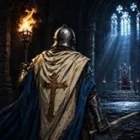
Dungeonbound
Play Dungeonbound, a auto-battler roguelike dungeon crawler game, free in your browser. No download, no sign-up.
You may like






















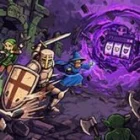

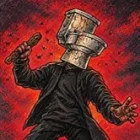

What do you do in a dungeon crawler when the fighting plays itself? In Dungeonbound the answer is that the real work happens before the first swing: you choose a hero, arrange gear on a backpack-style grid, and let speed-driven turns resolve attacks, dodges, critical hits, counters, and status ticks on their own. The result sits somewhere between inventory Tetris, auto-battler, and incremental, all seen in first person through a retro CRT look.
| Genre | Auto-battler roguelike dungeon crawler |
| Perspective | First-person |
| Modes | The Long Haul, The Climb, Co-op Climb |
| Players | Solo or 2 to 4 in co-op |
Packing the Backpack Grid in Dungeonbound
Your gear lives on a backpack-style grid, and where each item sits matters as much as what the item does. There are over 540 items across five rarities, and you can merge duplicates up to level 10 or fuse any two items into a hybrid. Because combat resolves in speed-driven turns, the order in which your gear acts decides many fights before they start. The tell comes in the first few seconds: if your fastest item is not acting before the enemy, the board is wrong.
Beginners tend to fill every slot with raw damage and ignore speed and synergy. The status system punishes that approach, with poison, burn, bleed, stun, and thorns all giving defensive and attrition builds a real chance against bigger numbers. Loot goblins will feel right at home, since the fun is in finding combinations that nobody planned.
A fight is decided in the backpack, not in the arena.
The Long Haul: Seven Heroes, Seven Separate Progressions
The incremental mode gives you seven heroes: Warrior, Mage, Rogue, Monk, Archer, Alchemist, and Paladin. Each has its own gold, its own levels, and its own permanent upgrades, and progress on one is never lost while you play another. Dying here is a setback measured in floors, not hours, because you keep the loot, the levels, and the upgrades and simply go again.
The Mage adds a layer of choice with three subclasses, Lightning, Frost, and Fire, and each subclass keeps its own progression. Across the game there are over 400 permanent upgrades split between Damage, Defense, Sustain, Economy, and Unlocks. Early in the game, the question is usually whether to invest in Economy so later upgrades arrive faster, or in Damage so the next floor falls sooner.
Incremental fans will enjoy watching numbers climb, and every defeat banks progress toward the next attempt. Some players find the loop slow once the easy upgrades are gone, which is the usual price of the genre.
The Climb and Its Five Hearts
The Climb is the roguelike mode, a self-contained run with 32 heroes to unlock, each built around tag affinities and a passive of its own. Every floor offers a shop, monsters, a shrine, and rival builds standing in your way. You start with five hearts, and losing your last one destroys the build. Only your rank comes home with you, so each attempt is a genuine gamble.
Once the first floor begins, you pick one relic from three, and you repeat that choice on each of the first five floors. Those picks shape the whole run, and with 90 relics in the pool, no two climbs feel alike. The rivals you meet are asynchronous PvP opponents built from real players’ builds, so your board is tested against the creativity of other people.
By the time you reach the later floors, the enemy roster starts to show its depth. The game contains over 240 hand-painted enemies, including 49 elites and 17 bosses, and each one punishes a different kind of weakness in your build.
Co-op Climb and Daily Seeds: Playing Dungeonbound with Others
The Co-op Climb takes the same structure and opens it to two to four players. Everyone brings their own hero, gold, and shop, and the team shares five hearts between them. Fighters step in one after another while the rest watch the battle live, which turns each fight into a shared moment instead of a solo spectacle.
- Shared hearts mean one weak build can cost the whole team.
- Gear can be passed across the table between teammates.
- Loot is decided by dice rolls.
- Team leaderboards track how far each group gets.
The daily climb runs on a shared seed with three fresh modifiers, so everyone faces the same puzzle on the same day. The Item Workshop adds another layer, since you can design your own gear and share it with other players.
Where Auto Combat Frustrates Players
The most common complaint is that you have almost no control once a fight begins. Some players come in expecting a dungeon crawler where reactions matter, and they find the hands-off combat strange. The game rewards planning over reflexes, and players who want a button to press during battle may bounce off.
The Climb also has a harsh edge. Losing the last heart destroys the build, and only rank carries over, which roguelike fans accept but incremental players can find jarring after the forgiving Long Haul. The shift in tone between the two modes is something people discuss when deciding where to spend their time.
The sheer item count can overwhelm newcomers as well. With over 540 items and fusion options, learning which combinations work takes patience, and the first few runs can feel like trial and error before patterns start to click.
Dungeonbound Questions Players Keep Asking
- What is the difference between The Long Haul and The Climb? The Long Haul is the incremental mode with seven heroes, each keeping separate gold, levels, and permanent upgrades. The Climb is the roguelike mode, where five hearts, relics, and a carry-over rank define each run. Dying in Dungeonbound costs you floors in one mode and the entire build in the other.
- How many hearts do you get in The Climb, and what happens when you lose them? You have five hearts, and losing your last one destroys the build. The only thing that carries over is your rank. In the Co-op Climb the team shares those five hearts, so every fighter’s result matters to the whole group.
- How do you get stronger items? You can merge duplicates up to level 10 and fuse any two items into a hybrid. Items come in five rarities, and relics add another layer of power on top. The Item Workshop also lets you design and share your own gear.
Dungeonbound rewards the player who treats the backpack grid as the real battlefield, because every merge, fusion, and relic choice is made before a single turn resolves. From the Item Workshop to the final heart in The Climb, the next attempt always starts with a better idea of how the pieces fit.
More Action Games to Play Next
Enjoyed Dungeonbound? These picks from the same genre are a good next step:

Player Reviews
There are no reviews yet. Be the first one to write one.