
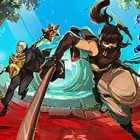
Guildrun
Play Guildrun, a pvE roguelike autobattler on a hex grid game, free in your browser. No download, no sign-up.
You may like












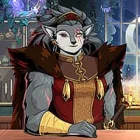







In Guildrun you start every run staring at three randomly offered heroes with no say over which three show up, which matters because that first pick quietly steers every shop, relic, and specialization choice that follows. There is no timer, no queue, and no opposing player waiting, so all the pressure comes from the board you are about to set.
| Genre | PvE roguelike autobattler on a hex grid |
| Play style | Single-player, no timer, save mid-run |
| Roster | 25 heroes across 75 specialization paths, per the demo |
| Progression | Eight difficulties, then Endless mode with global leaderboards |
| Core loop | Draft heroes, place them, stack relics and items, watch the fight resolve |
Karsu, Scorn, or Ratna: The Opening Draft in Guildrun
A typical opening offers three heroes from different corners of the roster: Karsu, a Frost-based Duelist; Scorn, a Poison and Stall Tank; and Ratna, a Crit-powered Mage. Whoever you pick defines the synergies you chase for the rest of the run, because every later offer in the shop gets judged against that first choice. The opening fight, against a demonic turtle, is gentle on purpose, so the real test is how you place your hero on the hex grid before the battle begins.
Treat the first pick as a direction, not a destiny. Guildrun gives you plenty of chances to pivot once the shops start rolling.
Heroes in the shop carry ranks, starting at C and climbing through B and A up to S, and buying a hero you already own turns into an upgrade instead of a duplicate. Every rank step hands you an ability choice, so a single hero can change character halfway through a run. Players who love tight early-game puzzles will find the first few shops oddly absorbing, since every Shard spent here compounds later.
Hex Board Basics: Frontline, Backline, and the Bench
Combat resolves automatically, so the decisions that matter come before the first swing. The hex arena is four rows deep: the front two rows are the frontline and the back two are the backline, and that split is the whole of the spatial game. Early in the run, a tank like Scorn belongs up front where his Poison and Stall effects can absorb attention, while a fragile mage like Ratna wants distance.
- Read the fight and note whether you face one large monster or a crowd.
- Place your tanks in the front two rows.
- Tuck ranged damage dealers and healers into the back two rows.
- Check any relic that cares about position before you confirm.
The last step is the easy one to skip. A relic that rewards position does nothing when the board ignores it.
Heroes waiting on the bench are not wasted slots. Karsu, for example, gets praised as a swap-in for boss fights because of how reliably she applies Frost, even though her random targeting makes her less dependable in hallway fights full of small monsters. Players who like to adapt mid-run treat the bench as a toolbox rather than a waiting room.
Relics, Items, and Shards: Where Runs Are Actually Won
Heroes get the attention, but relics and items decide how far a team travels. Items are equipment attached to a single hero, with three slots each, and they add attack, defense, or special skills. Relics work differently, applying abilities across the whole team, and there is no cap on how many you can collect. That split creates the central tension: you want variety on the board for healthy fights, yet enough similarity that the relics you buy help as many heroes as possible.
- Heroes: bought in the shop with Shards and upgraded when duplicates appear
- Items: three slots per hero, boosting one unit at a time
- Relics: team-wide effects with no limit on how many you carry
- Shards: the currency you spend in every shop between fights
Guides tend to say economy relics beat flashy combat ones in the first two rifts. Extra Shards compound faster than a small damage bump.
Relic synergy is where the game gets funny. You might land a relic that rewards a different class on every hero, which instantly forbids the comfortable plan of stacking one role, and that kind of restriction is why two runs rarely feel the same. Theorycrafters who love odd conditions chase these relics on purpose, while cautious players take team-wide effects that never go dead.
Breaking Class Roles: Specializations That Bend Heroes
Every hero begins with a class and a signature ability, but you choose where they end. Across 25 heroes there are 75 specialization paths and 180 specializations, enough to turn a backline healer into a frontline tank or a ranged damage dealer into a melee brawler. Pimenta is a good example: she is a flexible Tank whose specs can stack debuffs, scale attack speed, or lean harder into Poison and defense. Rowan, a Tank and Vanguard in one, scales his health through the run with The Friend spec.
Aria mixes Burn and Frost through Requiem Barrage. Some heroes can even be paired as lovers on the battlefield for rapid scaling bonuses.
Not everyone is sold on the depth. Some critics argue that hero ranks decide too much of a run and that the game lacks a trait system to give smaller choices more weight, and the dense tooltips for specializations and relics can overwhelm new players. Both complaints are fair, though reviewers still praise how often a run forces a pivot.
Climbing Eight Difficulties Toward Endless in Guildrun
Each successful run unlocks a harder challenge, giving you eight difficulties to climb, and fresh modifiers stack on top as you go. Once you clear them, Endless mode chases the top of the global leaderboards. Early in the climb the game forgives sloppy placement, but by the time you reach a named rift like the Red Rift, weak economy choices start to show.
Nothing here is timed. You can think as long as you like, save mid-run, and come back later.
That pace suits players who find real-time autobattlers stressful, and it rewards anyone who likes to pause and plan every shop. It also means defeats feel like your own decisions rather than a clock’s. When a run collapses, the cause is usually a missing answer to a boss, which sends you back to the draft with a clearer idea of what to pick next.
Questions About Guildrun Before Your First Rift
Is Guildrun a PvP game?
No. The game is PvE only, with no queue and no timer, and the absence of a PvP meta means no strategy is forced on you. Heroes like Scorn, Karsu, and Ratna are judged only against the monsters spilling out of the rifts.
How many heroes are in Guildrun?
The roster lists 25 heroes across 75 specialization paths. Beyond Karsu, Scorn, and Ratna you will meet names like Kai, Pimenta, Rowan, Aria, and Pollen, each with specs that can push them out of their starting role.
Which relics should you take first?
Early on, guides favor economy relics that grant extra Shards each round, because they pay off before the first two rifts are finished. After that, team-wide relics tend to outperform ones that boost a single hero, since they stay useful when a swap changes your lineup.
Guildrun rewards the player who treats every shop as a small puzzle: draft Scorn or Karsu, tuck the fragile mage behind the frontline, grab the economy relic while Shards still matter, and be ready to bend a healer into a bruiser when the board asks for it. Once a run clicks, the Red Rift stops feeling like a wall and starts feeling like a test of the team you assembled.
Other Action Scratch Games You May Like
Keep the session going with more games like Guildrun:


Player Reviews
There are no reviews yet. Be the first one to write one.