
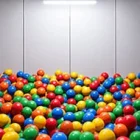
Playrooms
Play Playrooms, a cleaning simulation with psychological horror game, free in your browser. No download, no sign-up.
You may like


























Playrooms looks like a cheerful chore simulator about scooping colorful balls into ball pits, but it plays like a Backrooms-style horror run where the real job begins when the shift ends. Over 200,000 balls are scattered across its liminal spaces, and nobody tells you why they need to be collected. You work alone, or at least that is what the game wants you to believe. The cozy cleaning loop is the bait, and the darkness is what you are actually here to survive.
| Genre | Cleaning simulation with psychological horror |
| Perspective | First-person |
| Setting | Backrooms-inspired liminal spaces |
| Core Task | Return scattered balls to their ball pits |
| Balls to Collect | Over 200,000 |
| Players | Single-player |
Collecting Balls Across the Playrooms: The Daily Job
The job is simple on paper. You pick up balls, carry them back, and fill the ball pits, one scoop at a time. With over 200,000 balls scattered around, the game leans on repetition the way an incremental title does, and the rhythm of cleaning is meant to lull you. You do not know how long you have been working here, and nobody explains why everything has to go back.
Tidy first, panic later.
Filled ball pits unlock new abilities, and the balls you collect also work as currency. Eventually you have enough to buy the key to the next area, which gives each stretch of the loop a clear goal. The work stays the same while the room changes, and that sameness is what makes small changes in a room feel suspicious. Cleaning-sim fans and incremental fans will both feel at home during these early stretches.
Tiles, Water, and a Hallway with Too Many Doors
Each area is a different kind of empty. You move through tiled rooms, flooded spaces, endless corridors, and a hallway that has more doors than it should. These places are built from the liminal look that the Backrooms concept made famous: familiar, abandoned, and slightly wrong. Players who know that style will recognize the feeling of a building that was never meant to be explored by one person.
Familiar, empty, and slightly wrong is the whole aesthetic.
Early in the game the atmosphere is mostly quiet, and the job keeps your eyes on the floor instead of the corners. As you spend balls on equipment, the loop gets smoother. A scoop makes the collecting less tedious, and a flashlight helps once the lighting stops cooperating. Physics-minded players will enjoy how a pile of balls behaves, while exploration fans will keep peeking into every doorway.
Stay in the Light: When the Shift Ends in Playrooms
When the shift is over, the lights go out one by one, and from that moment only one thing matters: stay in the light. Something is waiting in the darkness, and the game never lets you forget it. This is the switch from cozy to tense, and it gives the loop a natural ending point. The slow fading of the lights teaches you to plan your route back toward the glow before it disappears.
The darkness is where the horror lives. The developers flag jumpscares with sudden loud sound effects and extended sequences in near-total darkness, while stating that there is no blood or graphic violence. That makes the fear more about anticipation than gore, which suits players who like atmosphere over splatter.
Headphones will make the tension worse, and a sudden loud sound can be rough if your volume is high. Players who dislike jumpscares may want to start with the gentler option described in the next section.
Choosing Your Own Danger Level
The game lets you decide how dangerous your job gets. One option is described as no fear at all, and the other is described as no second chances. That choice sets the tone of the entire run: the first suits players who mostly want the cleaning loop in an eerie building, while the second turns every dark stretch into a real risk.
Pick the mode that matches your nerves.
Not everyone will be satisfied. The grind of collecting 200,000 balls can feel repetitive to players who came for horror, while cleaning fans may find the jumpscares too sharp for a relaxing evening. The blend of genres means neither crowd gets everything it wants, but players who enjoy the contrast will find it unusually distinctive.
Planning Your Shift: Scoop, Flashlight, and the Key
Scoop is the first piece of equipment most players want, since it speeds up the repetitive part of the job. Every ball you move faster is a ball you do not have to carry later, and a faster loop leaves more shift time for exploring.
Flashlight becomes valuable once the lights begin to fail. Spending balls on it early is a safety investment, because the darkness is where the real danger lives.
Ball pits reward focus. Filling a pit unlocks new abilities, so finishing one pit before starting another is a sensible habit rather than spreading your effort across several.
The key is the long-term goal. Balls are currency, so the central tradeoff is spending on equipment now or saving toward the key to the next area. Time management players will enjoy that tension.
Questions Players Ask Before Entering Playrooms
Is there a way to try Playrooms before buying?
Yes, a demo is available, and it has drawn a Very Positive response from players. It is a low-risk way to see whether the ball-collecting loop and the dark stretches suit you.
How many balls do you have to collect?
Over 200,000 balls are scattered across the rooms. You bring them back to the ball pits, and filled pits unlock new abilities while the balls themselves work as currency toward the next key.
Can you play without being scared constantly?
One difficulty option is described as no fear at all, so players who dislike the scares have a gentler path. The darkness still exists after the shift, and the jumpscares and near-total darkness the developers flag are part of the design.
Playrooms asks you to love the rhythm of a scoop and a full ball pit, then punishes you for forgetting where the light is. Keep your flashlight ready, fill one pit at a time, and remember that the lights always go out eventually.
Other Adventure Scratch Games You May Like
If Playrooms clicked with you, try one of these next:
Also in Horror Scratch Games


Player Reviews
There are no reviews yet. Be the first one to write one.