Shutter Story
Play Shutter Story, a investigative psychological horror game, free in your browser. No download, no sign-up.
You may like















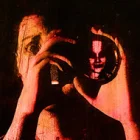
You drag the exposure slider on an old family photo in SpectralAware 2.1, and a face slowly appears in the dark corner of the living room where nothing should be. That is the moment Shutter Story hooks you. Your best friend Eli is convinced his family is haunted, his parents dismiss it as an overactive imagination, and you are the budding photo editor he trusts to find proof. The game splits its time between an early-2000s computer desktop, where you analyze photos and home videos, and tense first-person sequences where the horror bleeds out of the pictures and into the house around you.
| Genre | Investigative psychological horror |
| Core tool | SpectralAware 2.1 photo and video analysis software |
| Key character | Eli, your best friend |
| Anomaly categories | Apparition, Spectral Form, Impossible Event, Demonic Entity |
| Main goal | Classify paranormal evidence and uncover the family’s secret |
SpectralAware 2.1 and the Art of Looking Closer
The heart of the game is the in-game software. SpectralAware 2.1 gives you exposure controls and a range of filters, and you use them to reveal details hidden in Eli’s family photos and videos. A dark hallway might look empty until you push the brightness, or a blurry figure in the background only takes shape once you apply the right filter. The tools are introduced gradually rather than all at once, which keeps early photos approachable and later ones properly tricky.
Finding something is only half the job. Once you spot a figure or a strange event, you have to classify it correctly, and that is where the detailed handbook comes in. Each category has distinct identifying characteristics, and reading the manual carefully is the difference between a correct call and a misread. Players who skip the handbook and guess usually get punished sooner or later.
The desktop itself sells the setting. The chunky windows, the old operating system feel and the click of opening a new file all feel like an early-2000s family computer, and that nostalgia makes the uncanny images hit harder.
Apparitions, Spectral Forms and Telling Them Apart
The four categories — Apparition, Spectral Form, Impossible Event and Demonic Entity — are where most of the thinking happens. On the surface some look similar: a faint human shape could fit more than one label. The handbook breaks down the telltale signs of each, and the real skill is matching what you see to those specific descriptions rather than to a gut feeling.
- Read the full handbook entry before classifying, not just the title.
- Check every corner and reflective surface after adjusting exposure.
- Replay home videos frame by frame — some events last only a moment.
- Compare older and newer photos of the same room for changes.
The trickiest cases sit between Apparition and Spectral Form, where a faint figure could plausibly fit either label. Re-reading the handbook descriptions side by side is usually what settles it.
Puzzle fans who enjoy careful deduction will feel right at home here, because classification rewards patience over speed. The game makes clear that Eli’s family’s fate depends on how well you do the job, so every choice carries weight.
When the Horror Leaves the Screen
Shutter Story does not keep you safely behind the monitor. Between analysis sessions you step into first-person sequences, exploring rooms and solving environmental puzzles while the things you discovered in the photos start showing up around you. These moments break the comfort of the desktop and make the evidence feel personal.
One image players often bring up is a dark, mold-like outline of a person on a wall — the kind of detail that is easy to miss on first glance and impossible to forget once you notice it.
The pacing is a slow burn rather than a jumpscare parade. Horror fans who prefer unease over shocks tend to rate this approach highly, since the dread builds through small discoveries and a growing sense that the family’s history runs deeper than a single haunting. The generational secret unfolds through the photo album, one picture at a time.
What the Demo Shows of Shutter Story
The demo covers roughly the first 45 minutes of the story and includes 19 photographs and videos to analyze. That is enough to learn the tools, meet Eli and get a strong taste of the first-person sections. It also answers the most common question newcomers search: how long the opening lasts and whether it gives a fair sense of the full investigation.
The demo also shows how the difficulty climbs. Early photos have fairly clear anomalies once you adjust exposure, but later ones layer subtle details and require combining filters. By the time you are working through the home videos, you need to scrub carefully and pause at the right frame.
Players who enjoyed archive-browsing investigation games will recognize the inspiration immediately, while horror fans curious about the premise get a self-contained slice that ends on a note that makes you want more. Many players come back to replay the demo just to catch details they missed the first time.
Concerns Players Raise About Shutter Story
Because classification hinges on reading the handbook, some players find the system demanding and occasionally ambiguous. A few cases feel like they could fit more than one category, and the frustration of a wrong call when you thought you read the signs correctly comes up in discussions.
Others worry about how well the slow pace will hold over a full-length story. The demo is tight and focused, but stretching that formula over many hours depends on how varied the later photos and first-person sections turn out to be.
Investigation lovers mostly see these as fair concerns rather than dealbreakers. The core loop of adjusting, discovering and classifying feels fresh, and the setting gives the horror a uniquely personal angle. The question everyone keeps asking is simple — what happened to Eli’s family — and the photo album is the only way to find out.
Shutter Story turns a family photo album into a crime scene, and the deeper you dig with SpectralAware 2.1 — pushing exposure, checking the handbook and helping Eli build his case — the clearer it becomes that the haunting started long before he took those pictures. Each correctly classified Apparition or Spectral Form brings that truth a little closer.
Player Reviews
There are no reviews yet. Be the first one to write one.