 Skip to content
That’s Not My Mom!
Play That’s Not My Mom!, a anomaly-finding psychological horror game, free in your browser. No download, no sign-up.
You may like











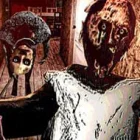



That’s Not My Mom! looks like a quiet first-person walk through an ordinary family home, but it plays like a constant test of memory where one missed detail means the woman waiting for you might not be your mother at all. You play a young elementary school boy coming back from school, and each return home brings the same rooms, the same furniture and a mom who behaves just a little bit wrong. The goal is to spot anomalies — changes that should not be there — while something strange spreads through the rest of the city. It is a short anomaly hunt, but the tension sticks with you long after the credits.
| Genre | Anomaly-finding psychological horror |
| Perspective | First-person |
| Main goal | Spot every anomaly in the house and uncover the truth |
| Key character | Mom |
| Typical session | Short — about the length of a long evening break |
Coming Home From School and Spotting the Changes
Each loop starts with the same moment: the boy walks through the front door after school. Your first visit is the most important, because that is when you build a mental picture of the normal house — where the shoes sit by the door, which pictures hang in the hallway, how the kitchen looks. Every later visit asks you to compare what you see against that memory. Players who rush the first walkthrough pay for it later.
Anomalies range from obvious to almost invisible. Some are impossible to miss, like objects in places they should never be, while others are tiny shifts in a frame or a shadow. Mom herself is often the center of attention, and her small changes in posture or behavior are what give the game its name and its creepiest moments.
Making the wrong call costs you progress, which is why players learn to slow down and sweep each room methodically instead of trusting a quick glance.
Why the Silence Works So Well
The game is not built around constant jumpscares. Most of the time the house is almost completely silent, and that silence makes every small creak or movement stand out. Several players have said the quiet was more frightening than any loud scare, and it fits the anomaly genre perfectly because your attention stays locked on the environment.
Sweep in a fixed route. Walk the same path through the house on every visit so your brain compares the same views each time. Watch Mom carefully. Her position, expression and actions are some of the most frequent sources of change. Check small objects twice. Picture frames, cups and items on shelves hide the subtlest anomalies, and they are the ones people most often miss.
Horror fans who loved the loop-and-spot structure of hallway anomaly games will feel right at home here. The family setting gives it a more personal sting, because the uncanny thing is not a stranger in a corridor but the person who is supposed to make you feel safe.
Difficulty, Rough Edges and Fair Criticism of That’s Not My Mom!
The biggest debate is about difficulty. Some anomalies are so small that players feel the game demands pixel hunting rather than real observation, and comments like “very difficult or maybe I’m just blind” are common. Others love that exact challenge and say the tiny details are what make finally spotting them satisfying.
Performance draws complaints too. A few players report choppy frame rates even on strong hardware, so lowering settings can help if the house feels sluggish. The visuals are photorealistic but modest, which suits the tight scope of a short project.
Players who enjoy speedrunning or perfect-run challenges get extra mileage from replaying with no mistakes, since the house layout becomes second nature on repeat visits. The most searched questions after a first run usually focus on how many anomalies exist, whether the mom is ever really your mom, and how to finish without missing anything — and the answer to all three comes down to that first careful walk through the front door.
That’s Not My Mom! Answers for New Players
- How do you find anomalies in That’s Not My Mom!? Memorize the house carefully on the first return from school, then follow the same route each time and compare every room with that memory. Pay close attention to Mom’s behavior and small objects like frames and cups, since those hide the subtlest changes.
- Is the game very scary? It relies more on atmosphere and silence than on constant jumpscares. The scariest moments come from realizing Mom is acting wrong, which builds a slow, uneasy tension rather than sudden shocks.
- Why do players say it is hard? Some anomalies are tiny, like a slightly moved object or a subtle change in Mom’s pose. Missing one costs progress, so careful, methodical sweeps of each room matter more than speed.
That’s Not My Mom! turns an ordinary walk home from school into a careful search, and the moment you finally notice what is wrong with Mom in the kitchen is the payoff that makes every slow sweep of the hallway worth it. A careful first visit is the single habit that separates clean runs from endless restarts.
Player Reviews
There are no reviews yet. Be the first one to write one.
