
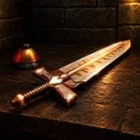
ForgeTax
Play ForgeTax, a first-person forging roguelite game, free in your browser. No download, no sign-up.
You may like























What do you do when a sword you have hammered into a small fortune cracks on the very next strike? ForgeTax is built around that question, and every day at the anvil asks it again while a dragon waits at the end of the shift for its tribute.
| Genre | First-person forging roguelite |
| Platform | Windows |
| Core loop | Forge swords, pay tribute, buy relics |
| Run ends | After the third failed tribute |
One More Strike at the ForgeTax Anvil
Each successful strike raises a sword’s value, and each strike also risks a Break that turns the blade into scrap. Relic text names other results, Hold and Damage, so hammering is never a simple coin flip. The only real decision is when to stop swinging.
Frenzy is what makes the risk worth it. Forge the same sword ten times to fill its ten squares, and the next strike starts a four-second window in which that sword cannot Break. The charge belongs to the sword, which is why beginners who keep swapping blades never see Frenzy begin.
Spreading strikes across several swords feels safe early, but committing to one blade until Frenzy fires is usually stronger. Push-your-luck fans feel at home on the very first day, because the game hands out that dilemma from the opening shift and never stops repeating it.
Relic Machine Synergies
Chained Hourglass. Every Hold outside Frenzy has a 50 percent chance to add a Frenzy charge, pushing you toward the ten squares even on mediocre strikes.
Cracked Wristwatch. Each Damage result outside Frenzy adds a Frenzy charge, so a bad strike still becomes progress. It and the Hourglass start appearing around Day 3.
Undying Wick and Perfect Mana Core. The Wick extends Frenzy by 2 seconds, and the Core adds six Great tickets while Frenzy is active, which rewards runs built around that short window.
Paying the Dragon in ForgeTax
Every evening you place swords in the tribute window and ring the bell. The dragon adds up total value and ignores how many blades it took, so one heavily forged sword can cover a quota several weak ones cannot. The requirement rises every day, so a setup that barely works on Day 2 will not hold forever.
Falling short raises the dragon’s Rage, and the third failed tribute ends the run. Day 1 hands you three starter relics from a pool of eight, and from Day 2 the shop offers three paid relics daily, though every sword fed to the relic machine is one less for the dragon.
Safety relics soften mistakes: one counts 30 percent of a broken sword’s peak value as scrap tribute, and Dragon’s Pardon prevents one death while lowering Rage by 1. Steam reviews sit at Mixed, with players arguing over how much luck should decide a run, and the store page discloses AI assistance for some assets.
Cautious planners should chase the safety relics before greed relics, while players who love gambling tend to stack Frenzy synergies and accept the occasional broken blade as the price of a huge payout.
ForgeTax comes down to one rhythm: commit to a sword, chase the ten Frenzy squares, and keep enough value ready for the dragon’s bell. Relics such as Chained Hourglass and Dragon’s Pardon can rescue a bad day, but planning for the rising tribute is what keeps the run alive.
More Casual Scratch Games to Play Next
Keep the session going with more games like ForgeTax:
Also in Clicker Scratch Games
Player Reviews
There are no reviews yet. Be the first one to write one.