
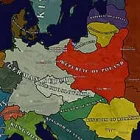
Pax Historia
Play Pax Historia, a alternate-history grand strategy sandbox game, free in your browser. No download, no sign-up.
You may like

















Pax Historia looks like a map-based grand strategy game but plays like a conversation, because the interface leans on a text field and an AI model acts as the engine. You pick a country and a moment in time, write what your nation does, and watch the rest of the world respond.
| Genre | Alternate-history grand strategy sandbox |
| Format | Browser-based |
| Input | Written actions and diplomatic chats |
| Scenarios | Historical, fictional and community presets |
| Core hook | AI-controlled nations react to every turn |
Choosing a Country and a Moment in Pax Historia
Every session begins with two decisions: which country you lead and which moment in history you enter. That pairing is the whole setup, and it can point almost anywhere, from a real turning point to a fictional timeline or a scenario another player built. Scenarios players talk about include a Rome that never fell, a Soviet Union that survives the 1990s and a world where the Central Powers win the First World War.
Beginners often pick a superpower and try to do everything at once. It is the same instinct that wrecks runs in traditional grand strategy, and here it leads to scattered orders and an unfocused story. A smaller nation with one clear goal tends to produce a sharper session.
History fans will feel at home because the starting moment gives context to every decision, while fiction writers use the same pick to invent a setting from scratch. This is why community members call it a sandbox, a word that fits better than strategy game in most conversations about it.
Actions, Diplomatic Chats and the AI Reaction Cycle
The loop runs on a simple principle of words, action and reaction. You write an action such as invading Greenland, or open a diplomatic chat to propose a trade agreement with 1800s Japan, and the AI decides how every other nation responds. Because each country is AI-controlled, every single turn depends on a model reply rather than a fixed table of rules.
- Write an action for your nation.
- Open a diplomatic chat with another actor.
- Read how the AI-controlled nations react, then plan the next turn.
Diplomacy feels like a negotiation with something that can surprise you, not a menu of accept and refuse buttons. A plan you thought was airtight can be answered by a reaction you never predicted, and that moment is what players usually describe when they explain why the game hooks them.
Because the AI treats whatever you write as part of one coherent simulation, odd ideas are allowed to have consequences. That open-endedness is the difference between this and a game with a fixed list of options.
Custom Maps, Scenarios and Community Presets
The creation tools are a major part of the appeal. Players can build custom maps, actors, historical contexts, flags and starting scenarios, then create, edit, copy and publish them as presets. Browsing community presets means you never run short of starting points.
Worldbuilders and roleplayers get the most from this layer, since a preset can be historical, alternate-history or entirely fictional. Someone who wants to test a what-if from an old forum thread can set it up in minutes instead of waiting for official content.
As with any community-made content, quality varies from preset to preset. A well-built scenario with clear actors and context usually gives the AI more to work with, while a vague one can produce muddled results.
What Pax Historia Does Not Do
There are no familiar tax sliders or army caps here. Traditional grand strategy such as Civilization or Europa Universalis relies on fixed mechanics you can learn, optimise and master, while this game replaces most of that with an AI model’s judgement. Players expecting a spreadsheet of numbers to manipulate will find a text box instead.
That makes it a poor fit for anyone who wants deterministic economic models or a high-skill mastery curve. Outcomes can vary between runs, and players debate whether the AI’s reactions feel realistic or simply surprising. The game has also been described as still evolving, so rough edges are part of the picture.
Pacing is different too, since each turn waits on an AI reply and so moves more slowly than a rules-driven game. Players who enjoy emergent narrative will accept that trade, and those who want speed and precision may not.
Writing Better Orders: Habits of Experienced Players
The engine responds to what you write, so vague commands produce vague outcomes. Experienced players name the target, the goal and the method, and add a line of context about why the nation is acting. An order to push a border region with a specific aim gives the AI far more to react to than a general instruction to expand.
Consistency helps as well. Keeping a long-term goal across several turns, and following up diplomatic chats instead of dropping them, makes the world feel like it remembers what you did. It also keeps your nation’s story coherent when you look back at the timeline.
The community maintains a Pax Historia Wiki and tutorials where players trade tips and explain the mechanics. New players who read a few of them before their first run usually spend less time guessing what the text box can handle.
Pax Historia turns one simple idea into a sandbox: pick a nation, pick a moment, and let an AI-controlled world answer. Whether you are testing a Rome that never fell, a Soviet Union that survives the 1990s or a trade agreement with 1800s Japan, the diplomatic chats and community presets keep the next turn unpredictable. If you want to write history rather than optimise it, a text box is all the control you need.
Explore More Sandbox Scratch Games
If Pax Historia clicked with you, try one of these next:
Player Reviews
There are no reviews yet. Be the first one to write one.