 Skip to content
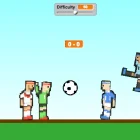
Soccer Physics
Play Soccer Physics, a physics sports Scratch game, free in your browser. Controls: One button per side.
You may like
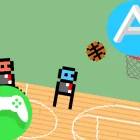




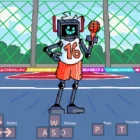





Soccer Physics looks like a sloppy joke with floppy players toppling over on a pitch, but it plays like a tactical timing game where one well-placed tap decides the match. Each side controls its players with a single button, and the players jump and swing their legs in a wild arc every time it is pressed. Learning when to press, and when to wait, is the whole skill.
| Genre | Physics sports |
| Controls | One button per side |
| Players | 1 versus computer or 2 on one device |
| Goal | Knock the ball into the opponent’s goal |
One Button and Two Floppy Players
Pressing the button makes both of your players jump and kick at the same time. They lean, rotate, and flail as they go, so the direction of a kick depends on how they are tilted at that moment. New players tap constantly and end up with their team lying on the grass while the ball rolls past.
Timing beats frequency. One clean press is worth more than five panicked ones.
The trick is to watch how your players are leaning before pressing. A forward tilt sends the next kick toward the opponent, while a backward tilt can send the ball into your own goal, which happens to everyone at least once.
Reading Tilt and Momentum in Soccer Physics
Because the players are physics bodies, they never land exactly the same way twice. A jump that sends one player forward might leave the other spinning in place. Watching the tilt of both players at once is difficult at first, but the faster you learn it, the more control you have.
Players often call the floppy movement ragdoll chaos. It is the source of most laughs and most frustration.
After a few matches, you start noticing small patterns, such as how a player leaning slightly forward will hook the ball upward. Those patterns turn chaos into something you can partly steer.
Keepers, Goals, and Defensive Timing
Each side has a player near its own goal who acts as the last line of defense. When the ball heads toward your net, pressing at the right moment makes the defender leap and block it. Pressing too early leaves him falling as the ball arrives.
Defense is mostly patience. The best block comes from waiting until the ball is close.
Competitive pairs learn that holding back on the button during the opponent’s attack often works better than trying to clear every bounce. The opponent’s own flailing frequently knocks the ball away.
Random Match Conditions
Matches can shift in ways that change how the ball and players behave, such as a bigger ball, a slippery pitch, or altered gravity. These changes reset everyone’s timing, which keeps matches unpredictable even for experienced players.
Some love these shifts. Others feel they undo any skill advantage.
Players who enjoy chaos and quick laughs tend to rate these changes as the best part of the game, while players who want pure competition sometimes find them frustrating in close matches. Either way, the first few seconds after a condition changes are when most own goals happen, so a cautious press or two is the safest start.
Soccer Physics Tactics That Actually Work
A few habits make a clear difference, even in a game that looks this random. None of them need extra buttons; they are all about when you press the one you have.
- Press only when your players are leaning toward the opponent’s goal.
- Hold back on defense until the ball is close to your keeper.
- Watch both players at once, not only the one nearest the ball.
Attacking follows a pattern of its own. The steps below describe a sequence that experienced players repeat almost every possession.
- Wait for your forward player to tilt toward the opponent’s side.
- Press as the ball reaches him so the kick sends it forward.
- Press again only after both players land, keeping them upright for the rebound.
The sequence feels slow at first, especially when the opponent is pressing wildly. It pays off quickly, because an upright team reaches the rebound while a flailing one is still face down in the grass, and that second touch is where most goals in a close match actually come from.
The Honest Debate Around Physics Sports
Critics say the outcome depends too much on luck. A goal can come from a random bounce off a falling player as easily as from a planned kick.
Fans disagree. They point out that skilled players win consistently over several matches.
The truth sits between the two views: individual goals can be lucky, but a full match rewards the player who reads tilt and waits for the right moment. That is why the game holds up for repeated play.
Soccer Physics turns from chaos into strategy once you stop tapping and start watching how your two floppy players lean before every press, holding the keeper’s jump until the ball is close. Learn that rhythm, and even a slippery pitch or giant ball cannot take away your edge.
More Sports Scratch Games to Play Next
Keep the session going with more games like Soccer Physics:
Other Scratch Games to Try


Player Reviews
There are no reviews yet. Be the first one to write one.
