
60 Seconds!
Play 60 Seconds!, a atomic survival and resource management game, free in your browser. No download, no sign-up.
You may like























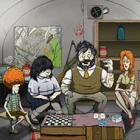
You sprint through the kitchen with the clock screaming down, grab a can of tomato soup, shove Timmy toward the stairs, and only then notice the radio still sitting on the living room shelf. That is the first lesson of 60 Seconds!, a dark comedy survival game where one minute of panicked looting decides how long Ted’s family lasts in a fallout shelter after the bombs drop.
| Genre | Atomic survival and resource management |
| Family | Ted, Dolores, Mary Jane, Timmy |
| Phases | Scavenge, then Survival |
| Main risks | Hunger, thirst, sickness, raiders |
The Scavenge Phase in 60 Seconds!
The run opens with Ted standing in a randomly arranged house and exactly 60 seconds on the timer. Ted can only carry four items at once, so every trip back to the shelter hatch is a decision about what matters most. Furniture and supplies shift between runs, which means a memorized route breaks the moment the layout changes. Grabbing everything in reach sounds smart, but the timer does not care how close you were to the door.
Family members count as cargo too. Every person you drag down the ladder is another mouth to feed, but also another body for expeditions and another chance that somebody stays healthy when sickness hits.
Veteran players talk about pathing the house: hitting the densest cluster of loot first, then using the final seconds for one last dive near the hatch. Still being upstairs when the blast arrives ends the run on the spot, a mistake almost everyone makes at least once.
Priority Loot Before the Blast
Food and water keep the family breathing, but tools decide whether the story ends in rescue or in a slow fade. The usual priority list from the community looks like this:
- Soup cans and water bottles, as many as the route allows
- The radio, which is how the military can eventually reach the shelter
- The axe or the rifle for standing up to raiders
- The gas mask and the map for trips into the wasteland
- The medkit and the bug spray for sickness and infestations
Beginners tend to overvalue soup. A shelter stacked with cans but no radio often survives a long time without ever getting a way out, and the journal entries grow darker by the week.
Odd items such as the playing cards, the checkers board, and the boy scout handbook look like clutter. Several journal events check for them, though, and the handbook in particular opens choices that would otherwise be locked.
Rationing and Reading the Journal
Once the hatch shuts, the game turns into a journal you read one day at a time. Each morning you decide who eats, who drinks, and who gets sent outside. One soup can feeds one person for that day, and most players space out food over several days per character while handing out water more often. Status lines are the real warning system: when the journal says Dolores looks starved or Timmy is losing his mind, the next day decides whether that becomes permanent.
Ignoring those lines for one extra day is how sickness and madness pile up.
Random events arrive through the hatch: knocks at the door, strangers offering trades, and raiders demanding supplies. How you answer depends almost entirely on what you grabbed in that first minute, which is why the two phases feel so tightly linked.
Expeditions Into the Wasteland
Sending someone outside is the only way to find more supplies and, in many runs, the only way to trigger a rescue. A family member with the gas mask and the map comes back healthier and with better loot than one sent out empty-handed. Expeditions take several days, and the shelter has to cope one person short while they are gone.
Mary Jane and Ted are common picks for long trips because losing Timmy early hurts the most in the later events.
Returning explorers sometimes bring back new items, story hooks, or nothing at all. By the time a second or third expedition rolls around, the inventory you built during the Scavenge phase decides whether those trips are survivable.
Endings and Replay Value in 60 Seconds!
There are many ways out of the shelter, from being picked up by the military after a radio broadcast to wandering off with strangers or simply running out of everything. Chasing different endings keeps people replaying for a long time.
The randomness is also the most debated part of the design. A run can collapse because of one unlucky event that no amount of planning could have prevented, and some players call that unfair rather than tense.
Others argue that the chaos is the point, since a dark comedy about nuclear panic should not feel fully under control. Players who enjoy narrative experiments will love the journal; players who want strict, fair strategy may bounce off the dice rolls.
Questions Players Ask Before Their First Run
How often should you feed the family in the shelter?
Space food out over several days per person and give water more often, adjusting the moment the journal mentions hunger or thirst. One soup can covers one person for one day, so a big family burns through a stockpile fast. Watching the status lines for Ted, Dolores, Mary Jane, and Timmy matters more than following a fixed schedule.
Is the radio really necessary to get rescued?
In most runs the radio is the clearest path to a military rescue, because broadcasts give you instructions and timing. Without it you can still survive for a long time, but rescue becomes much less likely and the run often ends on a grim journal entry.
Should you bring every family member into the shelter?
Bringing all four gives you more expedition options and more resilience against sickness, but it also doubles food and water pressure. Many players rescue everyone on normal runs and leave someone behind only for challenge attempts. If you do bring the whole family, prioritize soup cans and water bottles on the route.
60 Seconds! rewards players who treat the first minute as planning for the next month: a run that secures the radio, the gas mask, and enough soup cans gives Ted’s family real odds of hearing that rescue broadcast instead of reading a final entry in a cold shelter.
More For Boys to Play Next
If 60 Seconds! clicked with you, try one of these next:
Player Reviews
There are no reviews yet. Be the first one to write one.