

Throw Food For Animals
Play Throw Food For Animals, a for Boys game, free in your browser. No download, no sign-up.
You may like










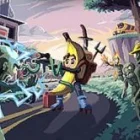





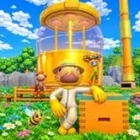


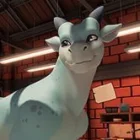

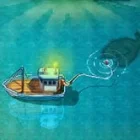

What do you do when every animal that walks up to your food is one you already own? That question sits at the center of Throw Food For Animals, and the answer decides whether your pen keeps growing or quietly stalls. The mistakes below cost players the most time, so they are worth knowing before you spend your next coins.
Training When You Should Be Shopping
The pull-up stand feels productive because every rep visibly adds reach. The trouble starts when a player has plenty of reach but keeps hauling the same Carrot into a new biome. Distance only decides where the food lands, while the food itself decides which animals come over to eat it. Most slowdowns in this game trace back to a handful of avoidable habits.
A good habit is to ask what is wrong with your last few catches. If they were weak, the food is the problem and the Food Shop is your next stop. If the animals you want live in a biome you cannot reach yet, the stand is the answer.
Players who split coins between the two tend to progress steadily, while players who pour everything into strength hit a wall once Common animals stop being interesting.
Reading the Rarity Ladder from Common to Cosmic
Foods are sorted into rarities that begin at Common and end at Cosmic, and rarer foods generally attract rarer animals. The word generally matters, because a better food raises your odds without promising a specific catch. Expect a few disappointing throws even after a big purchase.
- Common food: the Carrot you begin with, ideal for early Frog and Bunny catches
- Middle of the ladder: the long stretch where most players spend their time, buying one step up at a time
- Cosmic food: the top rung and by far the costliest purchase in the Food Shop
Every step costs far more than the last, so the order of your purchases matters as much as the purchases themselves. Skipping toward a distant goal usually means waiting a long time with no gain in income.
Rarity is also a rough guide to earnings. A Supreme animal will usually out-earn a Common one, but check the number on each animal instead of assuming.
Selling Too Early in Throw Food For Animals
Your pen earns passive income while you keep throwing, so every animal you sell is income you stop collecting. New players often sell their first Bunny to afford better food, then notice their coin flow shrank to a trickle. Selling is a tool, not a reflex.
The better habit is to keep the animals that earn the most and sell only clear duplicates and weak catches. That keeps the pen working while you save for the next food tier.
If you have ever wondered how to earn coins faster here, this is the simplest answer: a pen full of well-chosen animals beats any single big sale.
Gold and Size Variants Are Not Cosmetic
Two animals with identical names can pay very different amounts, because gold and size variants shift income. A gold Frog is more than a recolored Frog. It is a stronger earner that deserves a pen slot over a plain copy.
Look at the income number before you sell anything. Players who skip that step regularly part with their best earner by accident.
Community chatter treats the hunt for these variants as the real endgame loop, which explains why many players keep throwing long after their collection looks complete.
Pacing Your Coins Across 17 Biomes
There are 17 biomes and 140 animals in total, which is a lot of ground. Unlocking the farthest biome first is tempting and rarely efficient, since each biome has its own animal set and a steady outward push gives you new catches at every stage.
Think of each biome as a checkpoint. Reach it, throw a few times with your best food, collect whatever shows up, then move on. Rushing past a biome leaves holes in your roster that you will want to fill later.
Players who treat the collection as a checklist rather than a race finish with fewer regrets and a healthier pen.
Where Throw Food For Animals Tests Your Patience
Here is the honest part: the loop slows in the middle. Upgrade costs climb faster than income, and the pull-up stand can feel repetitive while you wait for a purchase to become affordable. Some players love that rhythm, while others step away for a day and return refreshed.
Live events and new map drops add fresh reasons to come back, and a new area often resets the excitement of the early hours.
If the grind wears on you, switch goals. Hunt a specific variant, fill a biome, or save toward the next food tier. A clear target makes slow stretches feel purposeful.
Throw Food For Animals gets easier once you stop treating coins as a single pile. Spend the Food Shop budget on animal quality, the pull-up stand on reach, and the pen on income, and the Waste Harvester stops looking like a distant dream.
Explore More For Boys
Keep the session going with more games like Throw Food For Animals:
Player Reviews
There are no reviews yet. Be the first one to write one.