
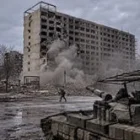
Deferral
Play Deferral, a tank action simulation with story-driven horror game, free in your browser. No download, no sign-up.
You may like













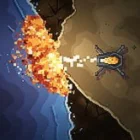



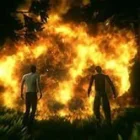




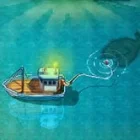


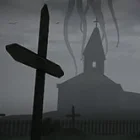



The commander’s seat in Deferral does not work the way tank games usually promise: you do not aim the gun or steer the hull, you give orders to a crew that answers to you. One tank, three seats and a real city sit in front of you, wrapped in a story about a war cult taking over a country. The sections below cover how the seats work, how the campaign and destruction behave, and what is still unfinished.
| Genre | Tank action simulation with story-driven horror |
| Crew | Commander, gunner and driver, with an AI crew filling empty seats |
| Co-op | Up to 15 players on one team through the Dynamic Campaign |
| Setting | A fictional country ruled by a war cult, based on The War of the Worlds |
| Look | Dark, retro, VHS-style visuals |
| Content | War violence, explosions, flashing lights and sudden loud sounds |
The Commander’s Seat and the Three-Person Crew in Deferral
Deferral is built around co-op with three seats in one tank: commander, gunner and driver. Seats that nobody takes go to an AI crew that obeys the commander, so a lone player is never locked out of the tank. That design makes the commander the person who reads the street, calls the targets and decides when to move.
The gunner’s side is the most tactile. The sight is drawn through the lens, a thermal channel shows the world as heat, and lamps and readouts sit around the edge of the field. Tracers streak from the coaxial and roof machine guns, which makes it easy to see where your fire is going.
The command interface, called the Staff, now shows less on screen: settings, a ring of orders and layers. Order-minded players will feel at home there, while anyone who just wants to shoot will probably prefer the gunner’s seat, and an easy beginner mistake is forgetting that an AI crew only does what the commander tells it.
A War Cult and Seven Days in a Ninth-Floor Flat
The story is based on The War of the Worlds and told from both sides of a war: a civilian who cannot fight it and cannot leave it, and a tank commander who does as he is told. The civilian half is seven days in a ninth-floor flat and its stairwell, where you work at the computer, take pills to stay sane and pay what the cult asks. The country, the armies and every emblem are fictional.
Days and nights have different jobs. By day you explore the building, work for pay, go out for pills and talk to neighbours, and when the knock comes you can pay, refuse or fight. By night you give the crew its orders, keep the tank running by hand and fight beside the tripods. The story arrives through dialogue, cutscenes, a world that changes every day, the radio in the tank and your parents in the phone’s messenger.
Be aware of two things before diving in. The content notes are heavy, covering war violence, suicidal themes, self-harm, war crimes, flashing lights and sudden loud sounds. The early release available now also centres on the tank part of the game, so check the current page before expecting the full story structure.
Dynamic Campaign and the City That Never Stops Fighting
The Dynamic Campaign is an endless war over a whole city, played through the co-op room. Several crews sit in their own tanks, and both sides plan operations of their own: they gather, drive in columns with infantry aboard, lay ambushes and launch assaults. You command your side from the map, which turns the commander’s seat into something closer to a field officer’s desk.
Infantry fight for buildings. Squads take windows, storm houses, blow their way through a wall and clear rooms, and a held house stays held until something breaks the defenders. Tank fire through a window is what does that, so supporting your infantry matters. Every building has an inside, with rooms, stairs and doors, which makes each house a small battle of its own.
Scale is the headline number. Up to 15 players can crew the same team, and a full fight runs a dozen tanks and fifty men a side with full destruction. Tactical players who like planning columns and ambushes will find the most to chew on here.
Destruction Physics: When Brick Falls Like Brick
Brick towers used to stand like concrete frames, but they are masonry now. A few high-explosive rounds into the ground floor will bring a tower down, and mud and craters scar the ground after a long fight. It changes how you choose firing positions, because a building you hide behind can stop being there.
The tank itself shows its age. Any tank, whether the stock hull or your own design, is dressed to match, with edges rubbed down to dark steel and chips, pits and scratches across the surfaces. The wear reaches the gun’s cradle, the breech and the loading machinery, and it moves with them as the gun works. That attention to the fighting compartment is a big part of why the interior feels used rather than clean.
There is a cost. The destruction physics run on the graphics card, so crowded battles ask a lot from weaker hardware. The game is also still in active development, which means features, balance and presentation keep moving between updates. Treat it as a project you watch grow rather than a finished release.
Tank Editor, Workshop and the Sandbox Side of Deferral
The vehicle designer lets you build a tank from scratch, and the order of the work is part of the appeal. The hull and turret come first, then the details that decide how the machine behaves under fire.
- Shape the hull and turret from three silhouettes: the side, the top and the front.
- Set armour edge by edge while the designer reports what it weighs.
- Choose the gun, loading, suspension, power pack, optics, crew stations and interior.
- Place fuel tanks with a button and size them by dragging their edges, so the litres follow the volume.
In co-op the commander picks the crew’s tank from the bureau’s presets or from their own designs, and the machine is sent to every player in the room. Your friends do not need to own it or find it in the Workshop. That small detail removes the usual friction of sharing custom vehicles.
Around the tanks sits a full sandbox with a level editor and a physics engine for destruction, and tripods appear there too. Players who enjoy tinkering will probably lose an evening weighing armour thickness against the weight the designer reports.
Straight Answers About Deferral
Can you play Deferral alone?
Yes, a lone player is not locked out of the tank. Seats that nobody takes are filled by an AI crew that obeys the commander, so you can sit in one seat and let the crew follow orders. The gunner’s thermal channel and the driver’s seat are still there to try when friends join.
How many players can crew together in Deferral?
A single tank has three seats: commander, gunner and driver. Through the Dynamic Campaign, up to 15 players can crew the same team, with several crews each in their own tank, while both sides plan columns, ambushes and assaults against each other.
Can you design your own tank in Deferral?
Yes. The Tank Editor lets you shape the hull and turret from three silhouettes, set armour edge by edge, and choose the gun, loading, suspension, power pack, optics, crew stations and interior. The commander can then send that tank to every player in the room, or pick one of the bureau’s presets instead.
Deferral is still growing, but the pieces that exist already give the commander’s seat real weight: the ring of orders in the Staff, the gunner’s thermal channel, a brick tower that collapses after a few high-explosive rounds, and a story where the knock at a ninth-floor door waits at the far end of the night. Watch the Dynamic Campaign and the Tank Editor most closely, because that is where crews are being assembled.
Other Action Scratch Games You May Like
Keep the session going with more games like Deferral:
Also in Shooting Scratch Games
Player Reviews
There are no reviews yet. Be the first one to write one.