
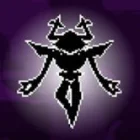
Roaring Knight Fight Simulator
Play Roaring Knight Fight Simulator, a action game, free in your browser. No download, no sign-up.
You may like











You nudge your SOUL between two growing stars, graze a third, and by the time the shards burst, Roaring Knight Fight Simulator has already taught you its first rule: stay calm and stay small. The Roaring Knight does not speak or taunt, and it never needs to. Every threat arrives as a pattern, and survival comes from reading that pattern a moment earlier than your instincts want to.
Your First Turns Inside Roaring Knight Fight Simulator
The fight comes from the end of Deltarune’s third chapter, where Kris, Susie and Ralsei face the Knight in a turn-based battle. On every turn the Knight launches one attack, and you steer a small SOUL around a bullet board to avoid it. Fan-made simulators keep that dodging at the center of the game, though how much of the original menu they carry over differs from version to version.
Beginners usually treat the bullet board like open space. They hold a direction, overshoot every gap and end up pinned against a corner. In the original fight, holding the CANCEL button activates slow SOUL, which cuts your speed to 50% for precise movement, and most players learn to use it long before they learn any pattern by heart.
Early in the fight, the Stars attack works as a gentle warm-up, so use that turn to learn how your keys feel. Players chasing a no-hit run also use it to practice grazing, because brushing close to a bullet builds TP in the original fight. That small reward is why careful players creep toward danger instead of running from it.
Reading the Knight’s Warnings Before Each Turn
Before every attack, the original fight shows a line of flavor text that hints at what is coming. A mention of a fierce north wind points to Box Splitter, a narrowing of vision points to Sword Tunnel, and a tight chest points to Rotating Slash. Whether a simulator shows those lines depends on the version, but the habit of reading before you move is worth building either way.
The attack order is fixed, and that is the real secret. The Knight cycles through five attacks three times, each pass harder than the last, and then keeps looping the third pass until its HP is lowered. Once you know the sequence, every turn becomes a question of preparation, not surprise.
Susie starts talking from turn 6 onward, and her lines act like a clock for how far you have come. Players who have seen the fight many times also notice that the Knight leaves a trail of afterimages behind it even while standing still, which quietly signals where its attention is. Some players say memorizing the order makes the fight feel scripted, while others argue that is exactly the point.
Five Attacks, Three Passes
Each attack returns in a tougher form on the second and third pass, so learning the first version is only the start. Here is what each one asks of you:
- Stars: growing stars burst into shards, and in the third pass each star becomes two shards that turn red and chase your SOUL one at a time
- Tracking Swords: ten swords appear around your SOUL and fire in the order they appeared, speeding up as the attack goes on
- Box Splitter: the bullet board is cleaved in two seven or eight times, and in the original the slash itself deals 66% of max HP
- Sword Tunnel: swords sweep from the top and bottom with a moving gap, and later passes rotate the angle or narrow the gap
- Rotating Slash: spinning red lines lock in and cut across the board, with up to four lines per slash
Corners are safer than the center for Box Splitter, though the diagonal cleaves of the third pass can punish a lazy position. For Sword Tunnel, watch the gap instead of the swords, keep your movements small and drift toward the right side of the board.
Most runs that end early end in the third pass of Sword Tunnel, where the narrower gap leaves almost no room to correct a mistake. That is also the moment when the fight feels most unforgiving, and players discuss it more than any other attack.
Phase 4 and the Full-Screen Finish in Roaring Knight Fight Simulator
Once the Knight’s HP falls below 80%, the original fight moves into its final phase. The Knight stops attacking for a turn and begins to glow while Susie grows pale, and that quiet turn is your chance to heal. Players who treat it as a rest tend to be ready for what comes next.
The full-screen Roaring attack then fills the whole display. Stars fly toward the Knight, spiral outward, drift back in and burst in six directions, and a final slash splits the screen down the middle. HoldBreath is the tool most players reach for, since it speeds up your SOUL by 25% for the whole battle and by 50% during this final attack.
After the last slash, the Knight lowers its guard and a single successful hit ends the fight. If you avoided damage until the charge-up, the original even shows a different line of narration, which is a small reward that no-hit players treasure.
Fan Remakes, Two-Player Mode and Difficulty Arguments
Fan versions do not all play alike. One full remake adds unused attacks from the original files and makes nearly every attack harder, and its creator reported beating the Knight in 13 turns while taking 7 hits. Players who like scorekeeping use numbers like that as a target for their own runs.
A two-player version splits the fight between friends. One player moves the defending character inside a bounded arena while the other controls the Knight’s sword attacks, and both share the same keyboard. It works best on a desktop or laptop, and it turns the usual solo grind into something closer to a couch game.
Difficulty is the biggest argument. In the original, losing does not trigger a Game Over, and the story simply continues, but a simulator has no story to move on to, so every loss means another restart. Some players love that pressure, and others feel that harder remakes drift away from the balance of the original fight.
Questions Before You Try Roaring Knight Fight Simulator
- How do I keep up with Tracking Swords? The swords fire in the same order they appear, so memorize that order before they start moving. HoldBreath also gives your SOUL a speed boost, which gives you more room to react when the swords speed up.
- Why does the same attack feel different later in the fight? The Knight goes through three passes of its five attacks, and each pass adds a twist, such as rotating angles in Sword Tunnel or diagonal cleaves in Box Splitter. Reading the flavor text before each turn helps you prepare for these changes.
- What should I do before the final attack? Use the charge-up turn to heal and make sure you have HoldBreath active. The Roaring attack spirals stars across the entire screen, so staying near the center and moving in small steps is safer than running from side to side.
Roaring Knight Fight Simulator rewards patience over panic, from the first graze on the Stars to the final slash that splits the screen. Learn the order of Sword Tunnel and Box Splitter, activate HoldBreath before the last attack and keep Susie’s words in the back of your mind, and the Knight starts to feel less like a boss and more like a pattern you can finally beat.
More Action Scratch Games to Play Next
Keep the session going with more games like Roaring Knight Fight Simulator:
Other Scratch Games to Try

Player Reviews
There are no reviews yet. Be the first one to write one.